Set
The set and the surface
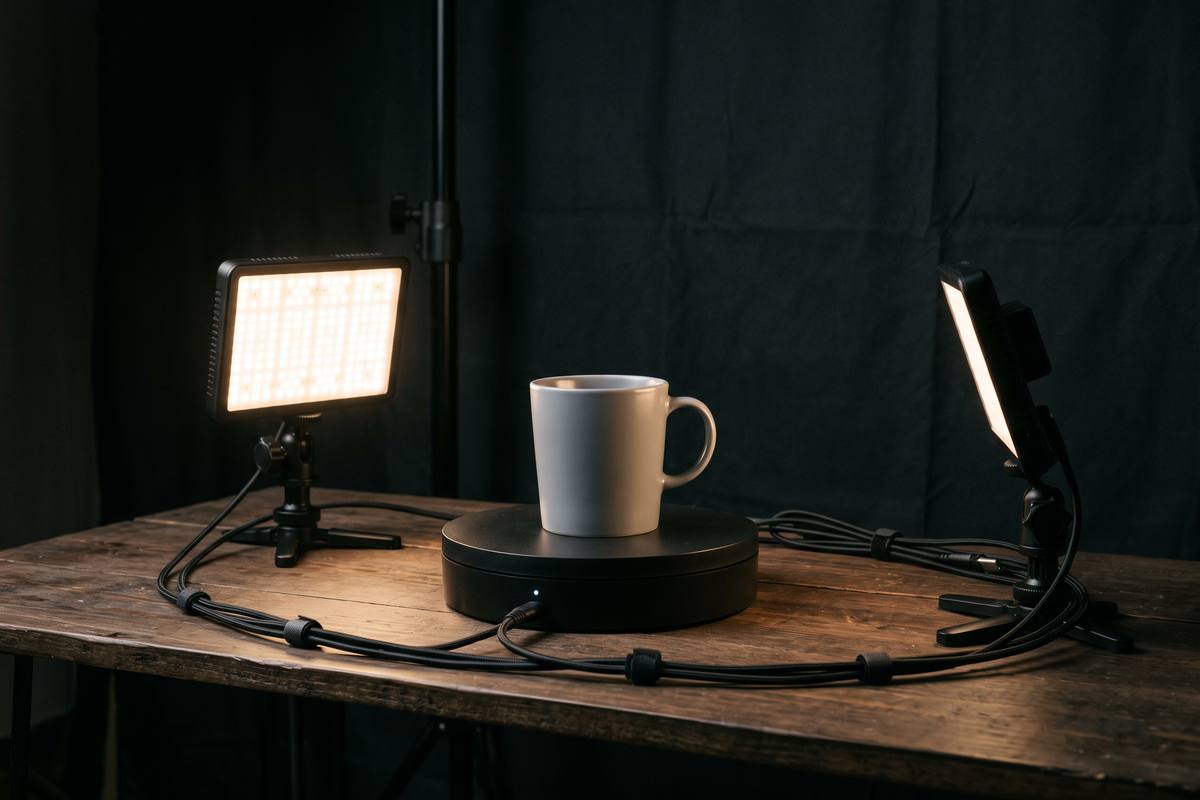
The surface the product sits on carries more of the image than the product itself. Choose it deliberately: matte for texture, glossy only when reflections are part of the story.
Tabletop video for small products
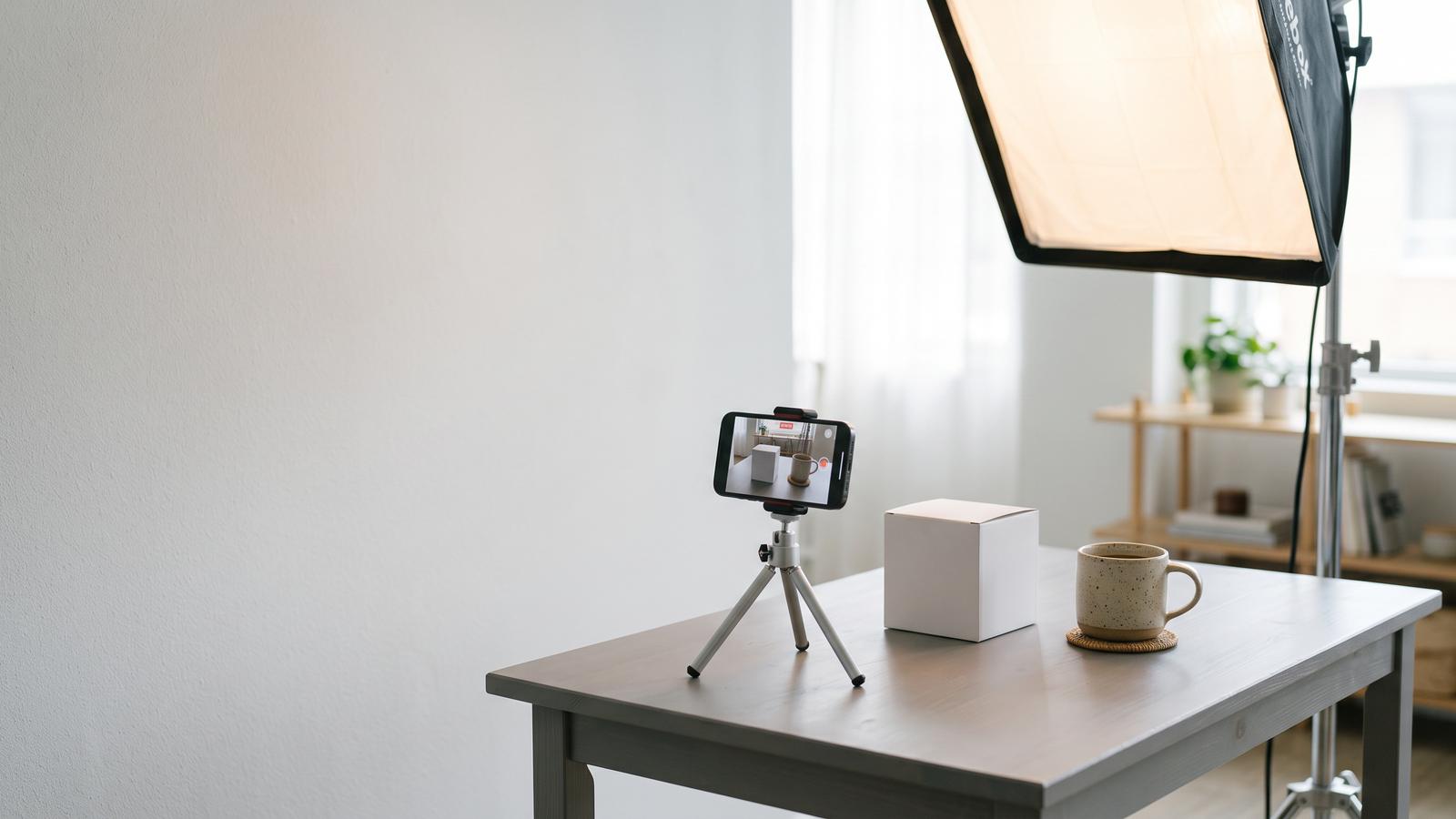
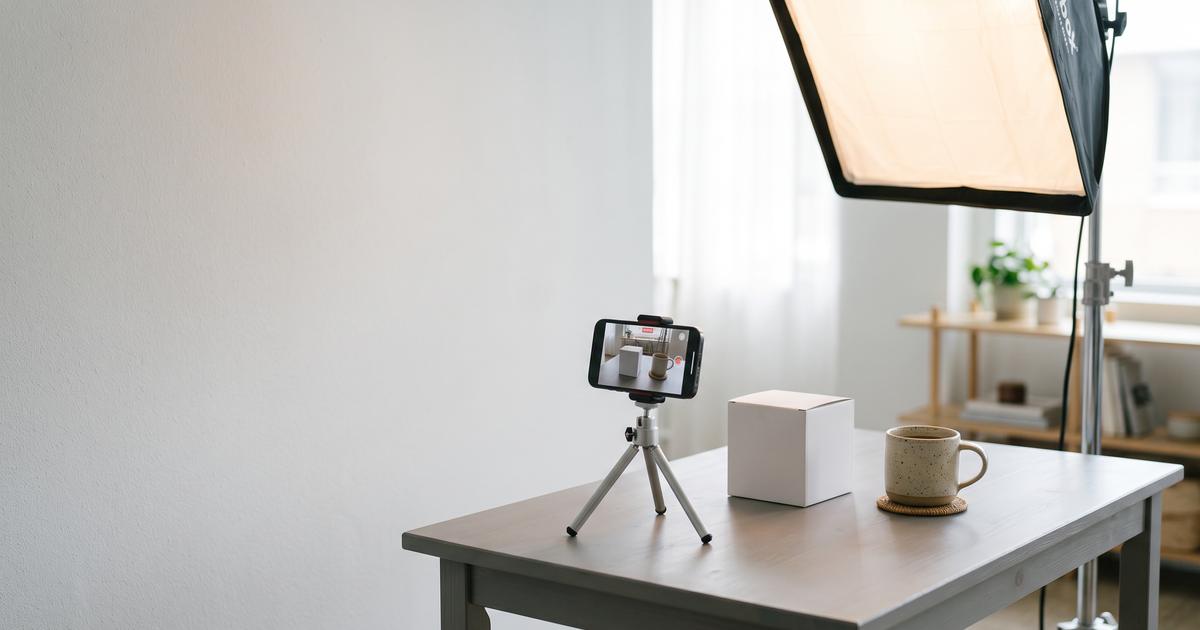
You do not need a studio to show a product clearly. A table, a window and one soft light will do more for a listing, a launch page or a short demonstration than a bigger camera will.
What changes a product video
A product video has one job: make the object easy to understand. Everything that does not serve that job is decoration, and decoration is where most tabletop shoots lose their time.
The three things that make an object readable on a phone screen are a clean background, light that reveals surface texture, and a small amount of movement that shows the shape from more than one side.
This site covers those three, in the order we film them. All the setups described here fit on a table roughly a metre wide and use at most two lights.
The essentials
Decide these and the shoot becomes a sequence of small tasks rather than a series of experiments.
Set
The surface the product sits on carries more of the image than the product itself. Choose it deliberately: matte for texture, glossy only when reflections are part of the story.
Light
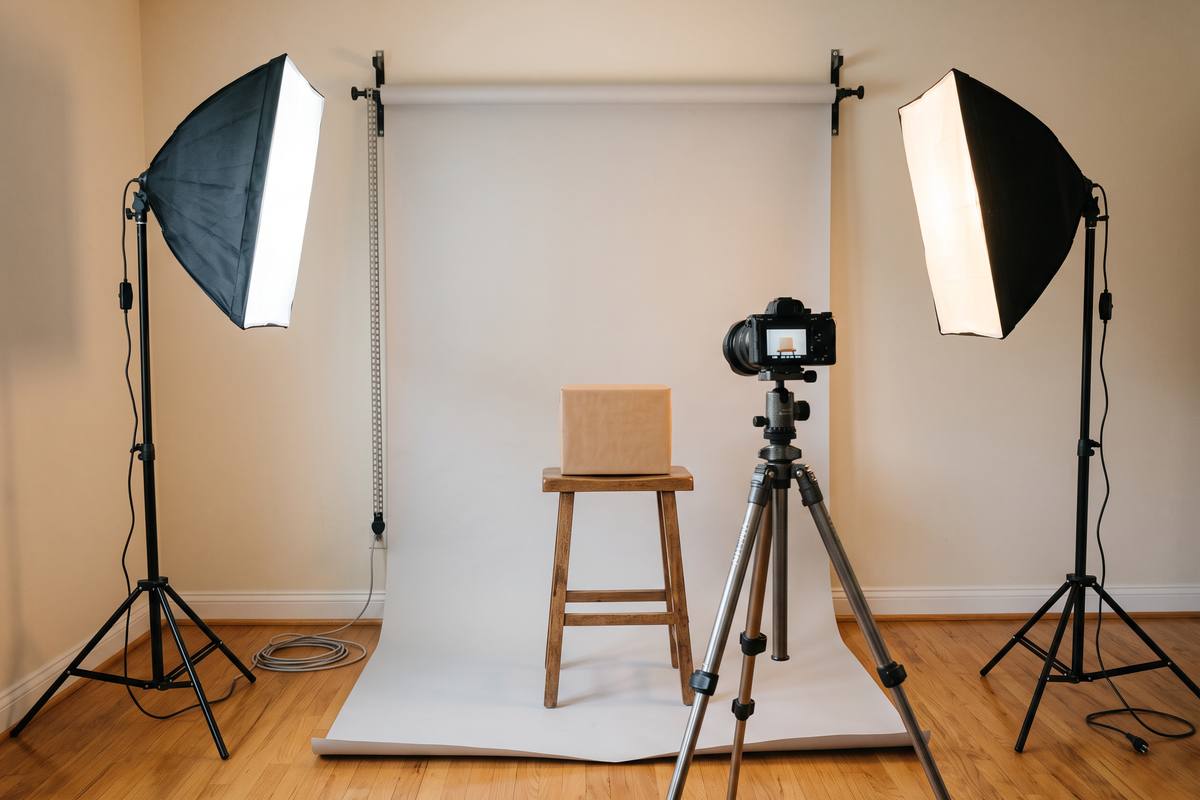
Small objects show every reflection. A large soft source placed to the side reveals texture, while a small or direct source produces hotspots that look like damage.
Angles
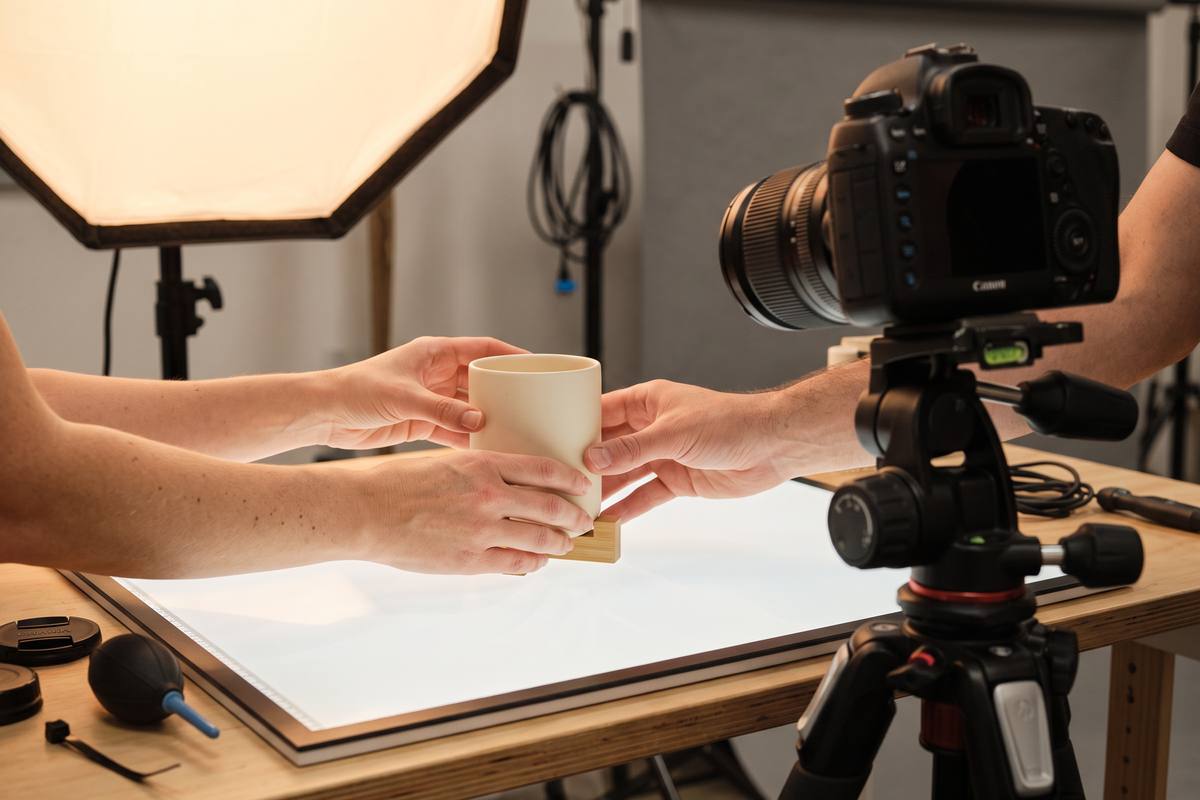
Three angles cover most products: a three-quarter view for shape, a low view for scale, and a top view for layout or contents.
Before you film
Clean the product thoroughly, then clean it again under the light you will film with. Dust that is invisible on a shelf becomes a bright spot on camera, and it is far cheaper to remove with a cloth than in editing software.
Decide how the product should be positioned before the camera arrives. Rotate it until the most recognisable feature faces the light, then move the camera — not the product — to find the frame.
Shooting order
Filming in this sequence means the camera is only moved once and the lighting is set up once.
Choose the surface, place the backdrop, and check how the surface behaves with a light on it. Everything that follows depends on this decision.
Set the main light before positioning the product. Move the product into the light rather than moving the light around the product.
The most informative angle first, while the product is untouched. This is the shot that will carry the video.
Close views, hands, and any rotation or pour. Keep the same lighting and change only the framing and the action.
Watch the first and last shot of each angle on the phone. Problems found now take a minute to fix; later they take a reshoot.
We film every product in the same corner of the studio, with the same two lights at recorded positions. Consistency is what makes a small setup look professional across a whole product range.
Product questions
For one product and three angles, between twenty and forty minutes once the set is built. The first setup of a new surface or backdrop usually takes longer than the filming itself.
Usually not. A phone can focus closely enough for most packaging and detail shots if the light is good. Add a clip-on lens only when the product is genuinely very small.
Move the light further to the side, increase the size of the source, and use a white card to fill the shadow without adding a second bright reflection. Sometimes a sheet of diffusion directly in front of the product is the fastest solution.
A plain matte surface with a slight tonal difference from the product. Bright white looks clean but can bleed into light-coloured products; a mid-tone grey or warm neutral keeps the object readable.
Only when scale or use needs explaining. Hands entering the frame help viewers understand size and handling, but they also add a lighting problem, so plan where they will be lit.
Guides
Set, light, angle: read them in that order and you can film a full product range on one table.
Studio setup
Surfaces, backdrops and the small details that make a table look like a studio without taking over a room.
Product lighting
How to reveal texture, control reflections and keep packaging legible with one or two lights.
Framing products
Three angles that cover shape, scale and contents, plus how to move the camera without losing focus.
Enquiries
Tell us what you are filming and how many items are involved. We can suggest a tabletop setup that keeps every product looking consistent.